



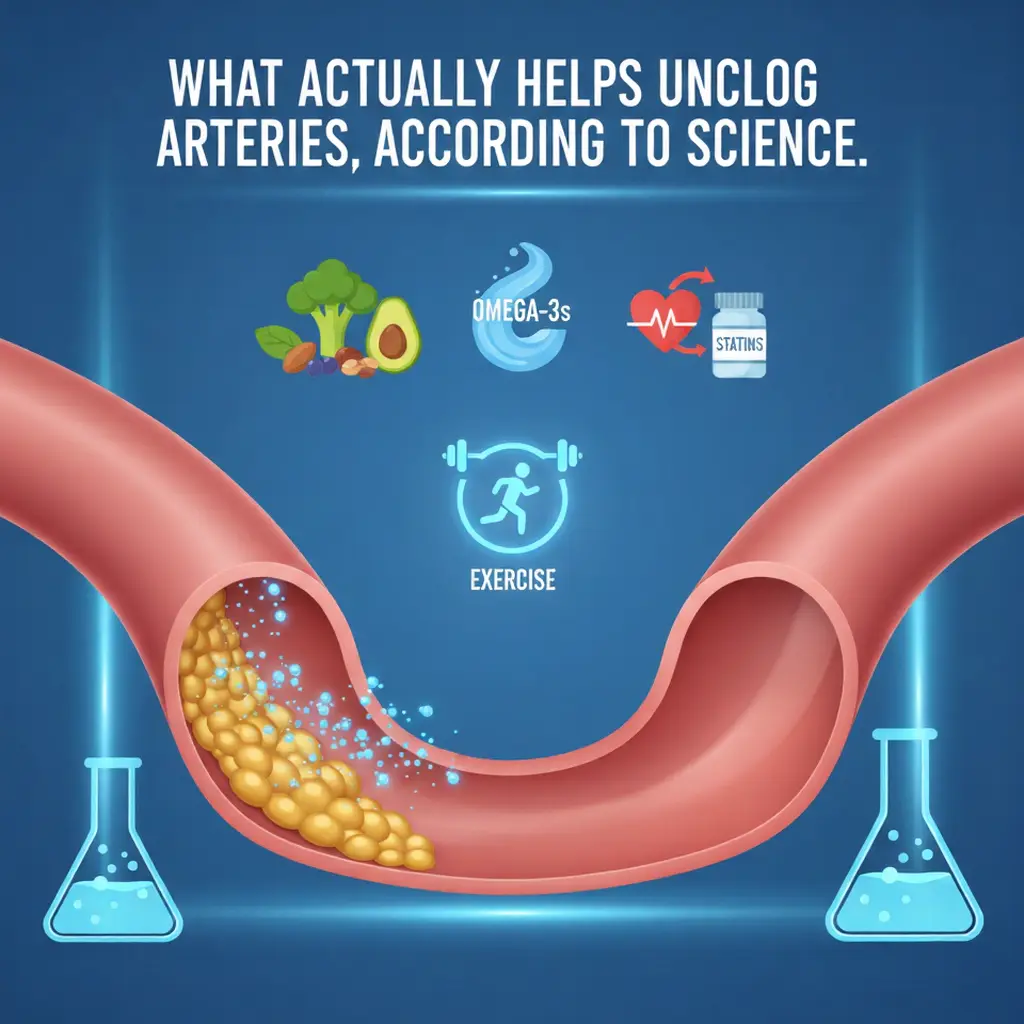
Many people wonder what the best foods to unclog arteries are, but the science points to a slower, steadier approach rather than quick fixes
What Actually Helps Your Arteries – and Why It’s Probably Not a Diet You’d Name
It usually starts the same way. A conversation over coffee. Someone mentions cholesterol. Another person swears by cutting carbs. Someone else says meat is the enemy. Vegan, keto, Mediterranean, carnivore—everyone has a flag to plant, and everyone sounds certain.What gets lost in the noise is a quieter, more inconvenient truth: most people don’t fail their hearts because they chose the “wrong” diet. They fail because the plan they picked asked them to become someone else entirely.Spend enough time around real patients, real bodies, real lives, and a pattern emerges. The healthiest way of eating isn’t the most extreme one. It’s the one that survives birthdays, work stress, travel, grief, boredom. A way of eating that’s imperfect but durable tends to do far more good than a flawless plan abandoned halfway through the year.Heart health, it turns out, has very little interest in labels. It responds instead to repetition—specific foods showing up again and again, across cultures and studies, doing quiet repair work over time. To understand why those foods matter, you first have to understand what’s actually going wrong inside the arteries.
How Arteries Get into Trouble
Arterial plaque doesn’t arrive all at once. There’s no single bad meal or one villainous nutrient responsible for it. What happens instead is slow, cumulative damage.It begins with injury to the endothelium, the thin, fragile lining inside blood vessels. Once that surface is compromised, LDL particles—particularly those carrying a protein called ApoB—can slip beneath the surface. In that damaged environment, inflammation and oxidative stress begin to alter those particles. The immune system steps in, trying to fix the problem.But repair doesn’t always mean restoration. Sometimes it means buildup.Each round of inflammation makes the area more unstable. Over years, arteries stiffen and narrow. Plaques grow larger and more fragile. Eventually, rupture becomes possible, and that’s where heart attacks and strokes enter the picture.So foods that genuinely support arterial health have to do more than just “lower cholesterol.” They need to reduce oxidative stress, calm inflammation, improve blood vessel function, and limit the number of harmful particles circulating in the first place.When researchers zoom out and look at decades of nutrition data, a handful of ingredients keep reappearing. Not as miracles. As patterns.
The Quiet Power of Red Fruits
One of those patterns shows up in red and pink produce—foods rich in lycopene.Tomatoes get most of the attention, but they’re not alone. Guava, watermelon, papaya, and pink grapefruit all carry meaningful amounts of this carotenoid. Lycopene acts as a potent antioxidant, neutralizing reactive oxygen species that damage cells and accelerate plaque formation.Oxidative stress plays a central role in early atherosclerosis. Studies suggest people with higher carotenoid levels tend to show slower plaque progression. Observational research from Finland has even linked higher tomato and lycopene intake to reduced buildup in the carotid arteries.This doesn’t make tomatoes a cure. It makes them reliable. The kind of food that keeps showing up in populations with better outcomes, meal after meal, year after year.
Plants That Outsmart Cholesterol
Another group of unsung contributors comes from plants that contain phytosterols—natural compounds found in nuts, seeds, legumes, whole grains, vegetables, and leafy greens. Flaxseed and sesame seeds are especially dense sources.Phytosterols look almost identical to cholesterol at a molecular level. When you eat them, they compete with cholesterol for absorption in the gut. Less cholesterol gets through. The liver notices. To maintain balance, it pulls more LDL particles out of the bloodstream.Over time, circulating LDL drops, including ApoB-containing particles that are strongly linked to heart disease risk. Meta-analyses suggest phytosterols can lower LDL cholesterol by around 14 mg/dL on average.It’s not dramatic. It’s not flashy. It’s the slow redirection of traffic away from damage.
Also read : THE DOPAMINE DIET – Feeding Your Brain For Creative Energy
Making Arteries Less Sticky
Flavonoids—found in berries, apples, citrus fruits, onions, leafy greens, and dark chocolate—work in a subtler way.As LDL particles oxidize inside blood vessels, they make the arterial wall “sticky,” attracting immune cells called macrophages. Those cells amplify inflammation and encourage plaque growth.Flavonoids reduce the expression of adhesion molecules on vessel walls, making it harder for immune cells to latch on. Less stickiness means less inflammation. Less inflammation means slower plaque development.Within this group, catechins—abundant in green and black tea—stand out. A large meta-analysis of long-term studies found that drinking three or more cups of tea daily was linked to a significantly lower risk of stroke compared to minimal intake.Prevention, sometimes, looks like boiling water and waiting a few minutes.
Olive Oil, Reconsidered
Extra virgin olive oil has been studied to exhaustion, and it keeps earning its reputation. Populations with high intake show lower rates of major cardiovascular events, including heart attacks.Its combination of monounsaturated fats and polyphenols supports endothelial function, reduces inflammation, and improves insulin sensitivity. Rather than targeting one pathway, olive oil seems to smooth the entire system—blood vessels, metabolism, immune response.It’s not a garnish. It’s infrastructure.
Fish, Fat, and Stability
Fatty fish—salmon, sardines, mackerel—supply omega-3 fatty acids, particularly EPA and DHA. These compounds don’t just reduce inflammation; they help stabilize existing plaques.Clinical studies consistently show that eating fatty fish one to three times per week lowers the risk of heart disease and stroke. Data from the Multi-Ethnic Study of Atherosclerosis found that higher DHA levels were linked to slower progression of carotid artery plaque.Omega-3s calm immune overreaction and increase nitric oxide production, improving blood flow and reducing rupture risk. They don’t undo history. They make the future less volatile.
Foods That Wear the Wrong Halo
The problem isn’t just what people eat—it’s what they’ve been told is safe. Many processed foods marketed as “heart-healthy” are quietly inflammatory. Sugary cereals, breakfast bars, flavored yogurts, and pastries. Even fruit juice, stripped of fiber and concentrated into liquid sugar, can overwhelm the system despite its natural origin. Whole fruit behaves differently. Fiber changes absorption. Juice bypasses that protection. These foods don’t just add calories. They increase oxidative stress, spike insulin, and feed the same processes that drive plaque growth.Marketing doesn’t care about arteries. Biology does.
Beyond the Plate
Food matters, but it isn’t the only lever. High-intensity interval training has shown striking effects. A randomized controlled trial in the European Journal of Preventive Cardiology found that six months of supervised HIIT reduced plaque volume—slightly more than what was observed with statin therapy over the same period.There’s also evidence supporting aged garlic extract. Multiple controlled trials suggest it may slow coronary artery calcification, stabilize vulnerable plaques, and improve blood pressure.Sauna use, while supported mainly by observational data, is associated with better endothelial function, lower blood pressure, and reduced all-cause mortality. The evidence isn’t perfect, but it’s consistent enough to be interesting.
What This All Adds Up To
No meal scrapes arteries clean overnight. Anyone selling that story is selling something else. What does exist is a pattern: diets rich in colorful plants, seeds, olive oil, tea, and fatty fish—paired with movement and metabolic care—create conditions where plaque formation slow,s and stability improves. Heart health isn’t a transformation montage. It’s a long, unglamorous accumulation of small advantages.Food becomes medicine not when it promises miracles, but when it quietly shows up every day and refuses to make things worse.
About The Author
